Beyond Pink: Understanding Today's Woman Rider
For years, the motorcycle industry has acknowledged women riders by making things pink.
Pink helmets. Pink jackets. Pink gloves. Pink accessories.
While there's absolutely nothing wrong with the color pink, reducing the fastest-growing segment of motorcycling to a color misses the point entirely.
Today's woman rider isn't asking for a pink version of a man's motorcycle experience.
She's asking to be seen.
She Isn't a Passenger
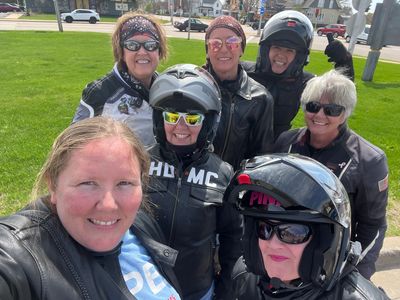
Women are no longer entering motorcycling solely because a spouse rides. Many are buying their first motorcycle on their own. Others are returning to riding after raising families. Still others are crossing the country solo, leading group rides, competing off-road, teaching riding skills, restoring vintage motorcycles, and logging hundreds of thousands of miles.
The modern woman rider isn't a niche customer.
She is a motorcyclist.
She Wants Respect Before She Wants a Discount
Many women can tell stories about walking into a dealership only to have the salesperson speak to the man beside them.
Or worse, being ignored entirely.
Or hearing:
"That's probably too much bike for you."
Or having technical questions answered with condescension instead of respect.
Most women aren't looking for special treatment. They're looking for the same thing every customer deserves: to be listened to, taken seriously, and treated as capable adults.
Respect isn't complicated. It begins by asking questions, listening carefully, and leaving assumptions at the door.
Community Matters
Motorcycling has always been about freedom.
For many women, it's also about belonging.
Women often seek riding communities where they can learn, ask questions without embarrassment, celebrate milestones, and gain confidence alongside other riders.
Businesses that create authentic communities—not just customers—build loyalty that lasts far longer than a single sale.
Representation Matters
Look at your marketing.
Who appears in your advertisements?
Are women shown riding their own motorcycles, or simply standing beside them?
Are they portrayed as experienced riders—or only beginners?
Do they reflect a range of ages, body types, riding styles, and backgrounds?
Representation isn't about checking a box.
It's about showing women they already have a place in motorcycling.
Stop Selling Pink. Start Solving Problems.
Ask women what they actually need.
- Gear that fits correctly.
- Motorcycles they can confidently manage.
- Knowledge.
- Encouragement.
- Routes worth riding.
- Events where they feel welcome.
- Staff who listen.
None of those needs have anything to do with color.
Honor Women's Place in Motorcycling
Women's contributions to motorcycling didn't begin yesterday.
For decades, women have raced, toured, organized rallies, broken endurance records, led clubs, taught riding skills, and advocated for rider safety.
Their stories deserve to be told—not as side notes, but as part of motorcycling's history.
Recognizing those contributions isn't about rewriting history.
It's about telling the whole story.
The Opportunity
The businesses that will thrive over the next decade won't be the ones with the biggest "Ladies' Apparel" section.
They'll be the ones that understand women aren't a specialty market.
They're an essential part of the future of motorcycling.
When women feel welcomed, respected, and included, they don't just buy motorcycles.
They ride them.
They inspire others to ride.
They build communities.
And they help grow the entire industry.
Perhaps it's time we stop asking,
"How do we market to women?"
Instead, let's ask a better question:
How do we create an industry where every rider feels like they belong?
If you're a dealership, motorcycle business, riding organization, or industry leader interested in creating a more welcoming experience for women riders, I'd love to connect.
About the Author
Kathleen Peiffer is the founder of Mountain Sisters Motorcycling Adventures (MSMA), a community dedicated to bringing women together through riding, adventure, and education. She is also the creator and host of 2 Wheelin' Motor Femmes, a podcast celebrating the women who have shaped the past, present, and future of motorcycling. Through her writing, speaking, and consulting, Kathleen helps motorcycle businesses better understand and serve today's women riders while fostering a more welcoming, respectful, and inclusive motorcycle community.